.jpg)


How to Plan an Innovation Centre: Expert Advice from Daya

Written by:Sameer K Muhammad,Project Manager
Date published:
Last reviewed:
Designing an Innovation Centre That Can Keep Evolving
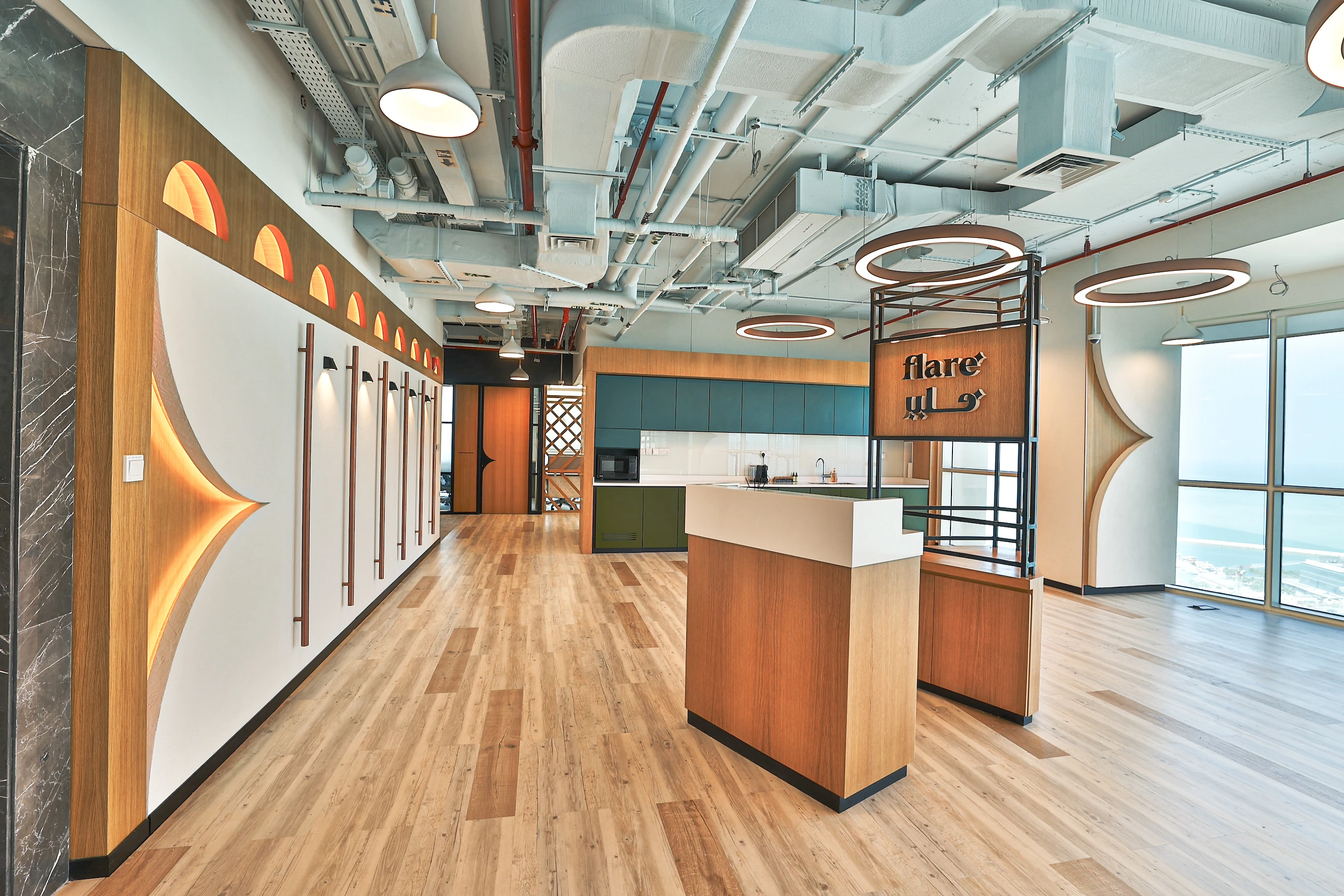
An Innovation Centre works best when the physical space, technology and experience are planned as one adaptable system rather than as separate features.
Unlike a conventional workplace, an Innovation Centre may need to support collaboration, focused work, learning, demonstrations, events, visitor engagement and informal interaction within the same environment.
The planning challenge is therefore not simply deciding what rooms to include. It is creating a workplace that can change according to who is using it, what they are there to do and how the experience needs to evolve over time.
Daya balances three considerations when developing the environment:
- Desirability: Creates an engaging and valuable experience for users.
- Feasibility: Aligns the design with achievable technology, systems and infrastructure.
- Viability: Supports sustainable business value and long-term relevance.
Together, these considerations help keep the design engaging, achievable and relevant to the organisation’s goals.
1. Start With What the Innovation Centre Needs to Enable
The purpose of the Innovation Centre should be established before individual rooms, displays or technologies are selected, because different activities require different spatial and technical responses.
An Innovation Centre can serve both internal and external users.
Employees may need spaces to:
- Collaborate and co-create.
- Develop and learn.
- Hold workshops and short huddles.
- Work individually or in focused groups.
- Test ideas and new technologies.
Clients, partners and visitors may instead need to:
- Understand the organisation's capabilities.
- Experience live demonstrations.
- Participate in workshops or co-creation.
- Explore emerging technologies.
- Attend events and presentations.
These requirements can then translate into spaces such as:
- Technology and innovation labs.
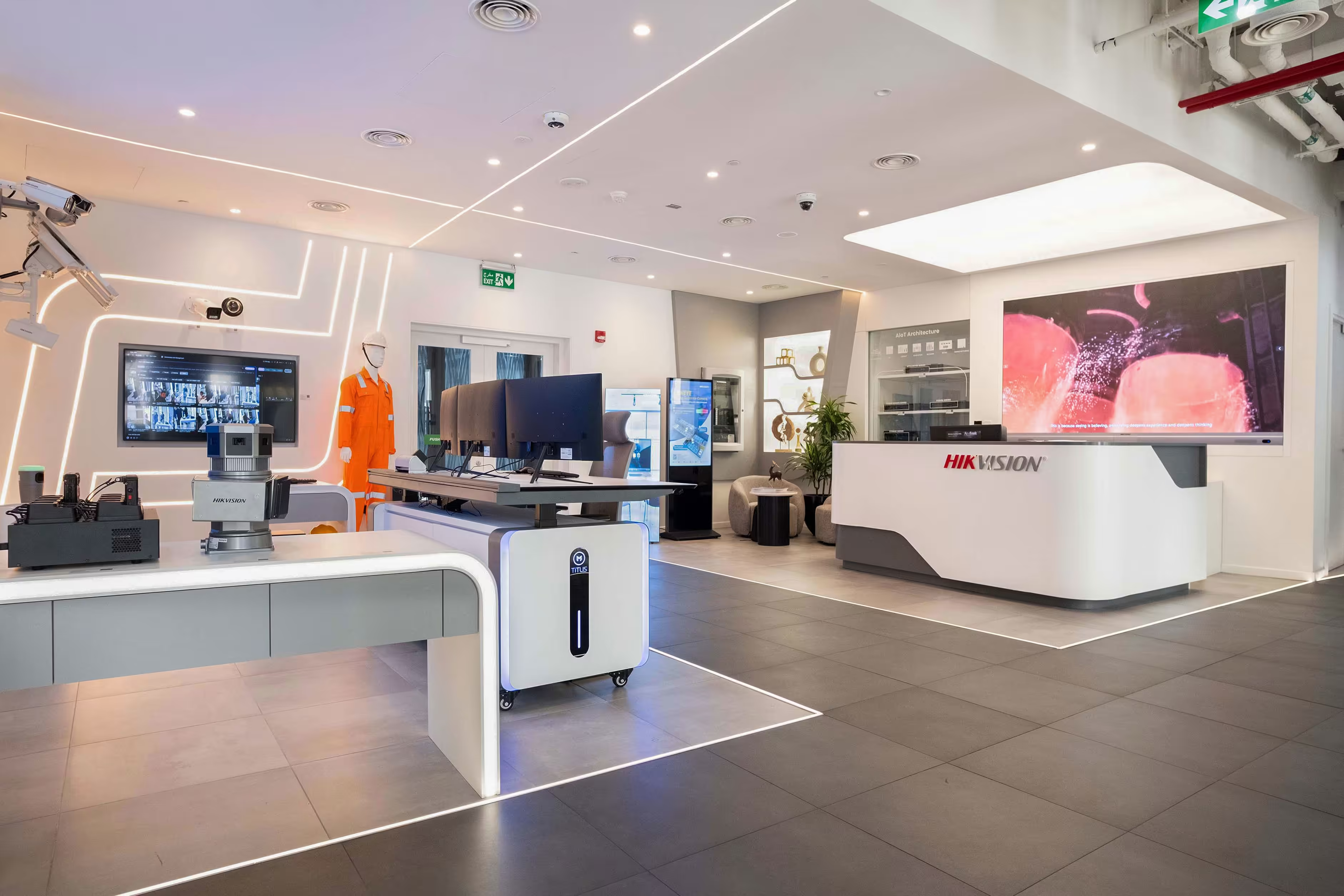
- Demonstration and showcase areas.
- Collaboration spaces.
- Focus areas.
- Workshops.
- Event or presentation areas.
- Networking and social spaces.
The key principle is simple: start with what needs to happen in the space, then design the environment around those activities.
2. Plan One Space for Multiple Modes
Innovation Centres need to accommodate different activities without leaving large areas unused when the mode of operation changes. Flexible planning allows the same environment to respond to different users and activities throughout the day.
The environment can be organised around several modes:
- Event Mode: Presentations, talks, launches, workshops and larger gatherings.
- Meet / Focus Mode: Collaboration, project work and focused sessions.
- Visitor Mode: Guided experiences, demonstrations and stakeholder engagement.
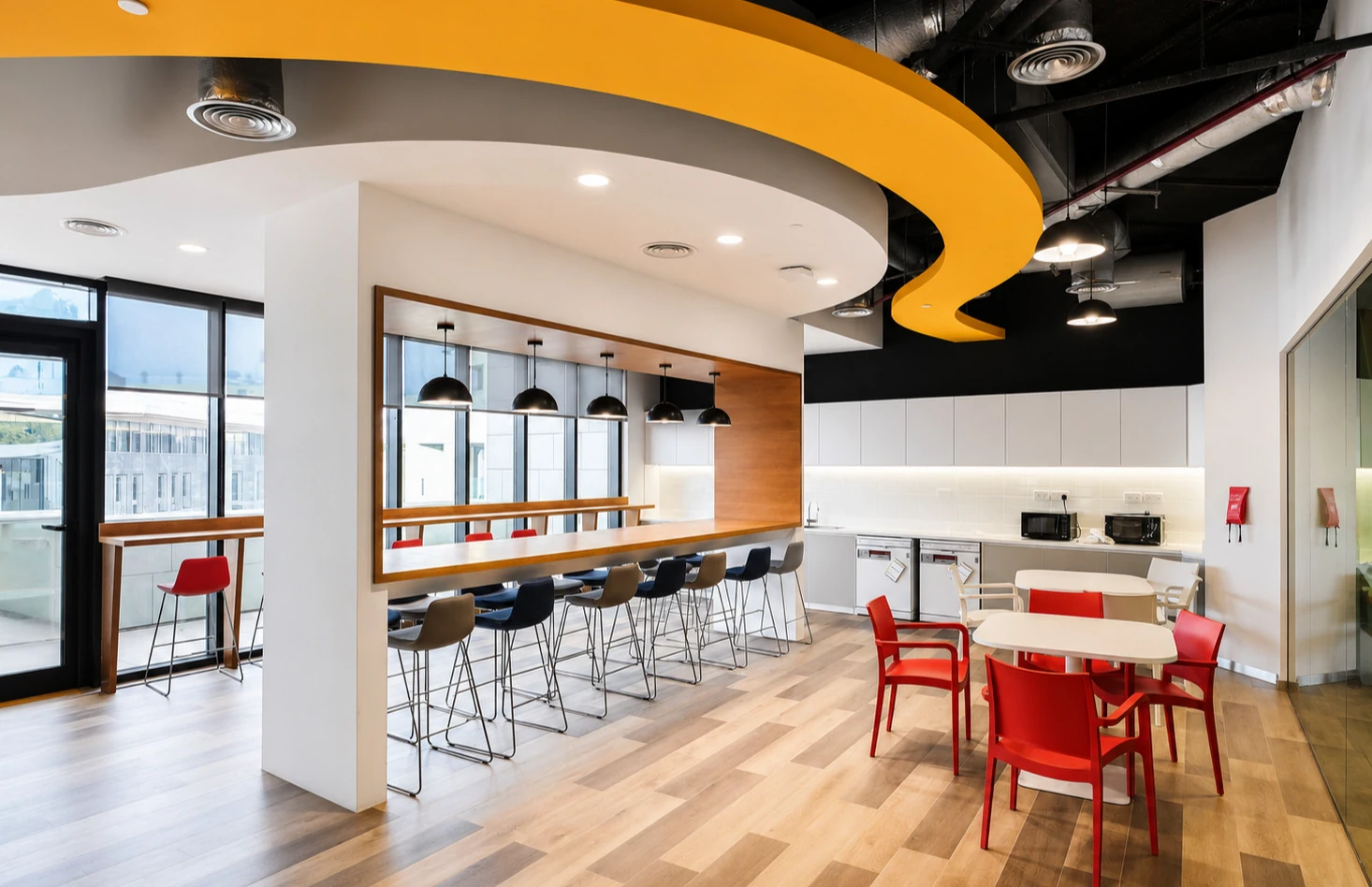
- Social / Rest Mode: Networking, informal conversation and recharge.
The design solution is not simply to provide a separate room for every activity. Instead, spaces can be designed to change configuration.
This can include:
- Movable or adaptable furniture.
- Flexible seating arrangements.
- Spaces that open or close according to group size.
- Displays that support different content formats.
- Lighting and environmental presets for different activities.
- AV systems that support collaborative, presentation and event use.
This creates one space with multiple purposes, allowing the centre to respond to changing activities without requiring a different environment for every mode.
Daya's Insight: Design each mode around a clear operational trigger — a booking, scheduled event or preset activated by the Curator, rather than relying on staff to manually reset the space. This makes it easier for a single zone to shift between event, day and visitor use.
3. What Are the Key Layers of an Innovation Centre?
A flexible floor plan alone is not enough. The physical environment, digital infrastructure and experiential technology need to be coordinated so the space can evolve without repeatedly rebuilding its foundation.
A useful way to plan these requirements is through three connected layers.
Structural Layer
The structural layer provides the physical foundation, without which the space cannot physically adapt to different activities.
It can include:
- Modular planning.
- Adaptable furniture.
- Movable elements.
- Flexible demonstration areas.
- Collaboration settings.
- Acoustic and lighting strategies suited to different activities.
Infrastructure Layer
The infrastructure layer provides the technological backbone, without which the space has flexibility but no way to actually run different modes.
It can include:
- LED and interactive displays.
- BYOD connectivity.
- Video conferencing.
- Wireless presentation.
- Room-booking systems.
- Centralised controls.
- Scalable AV infrastructure.
Experiential Layer
The experiential layer makes the environment more responsive and interactive, without which the space can adapt and function but cannot sense or respond to how it is actually being used.
It can include:
- Occupancy sensors.
- Environmental monitoring.
- Heat mapping.
- Usage analytics.
- Interactive content.
- AI-enabled experiences.
- Adaptive environmental controls.
Together, these layers allow an Innovation Centre to move beyond a static physical space and become an environment that can respond to changing activities and user needs.
4. Integrate Technology Around the Activity
Technology is most useful when it solves a clear spatial or experiential need. The activity should therefore determine the technology, rather than designing the centre around a collection of impressive devices.
For everyday collaboration, that might mean:
- Interactive collaboration displays.
- Wireless presentation.
- BYOD connectivity.
- Video conferencing.
- Digital whiteboarding.
For events, it may require:
- Large-format LED displays.
- Integrated audio.
- Wireless microphones.
- Cameras.
- Presentation controls.
- Flexible display configurations.
For immersive demonstrations, it could include:
- Mixed Reality.
- AR or VR.
- Simulations.
- Digital twins.
- Interactive data visualisation.
- AI-enabled demonstrations.
An immersive technology area, for example, can combine a flexible physical setup with displays, simulation technology and Mixed Reality experiences. The technology then becomes part of a demonstration, learning or storytelling activity rather than a standalone attraction.
So rather than asking:
“What technology should an Innovation Centre have?”
the stronger question is:
“What experience or activity should this technology enable?”
5. Design the Visitor Journey Through Meaningful Touchpoints
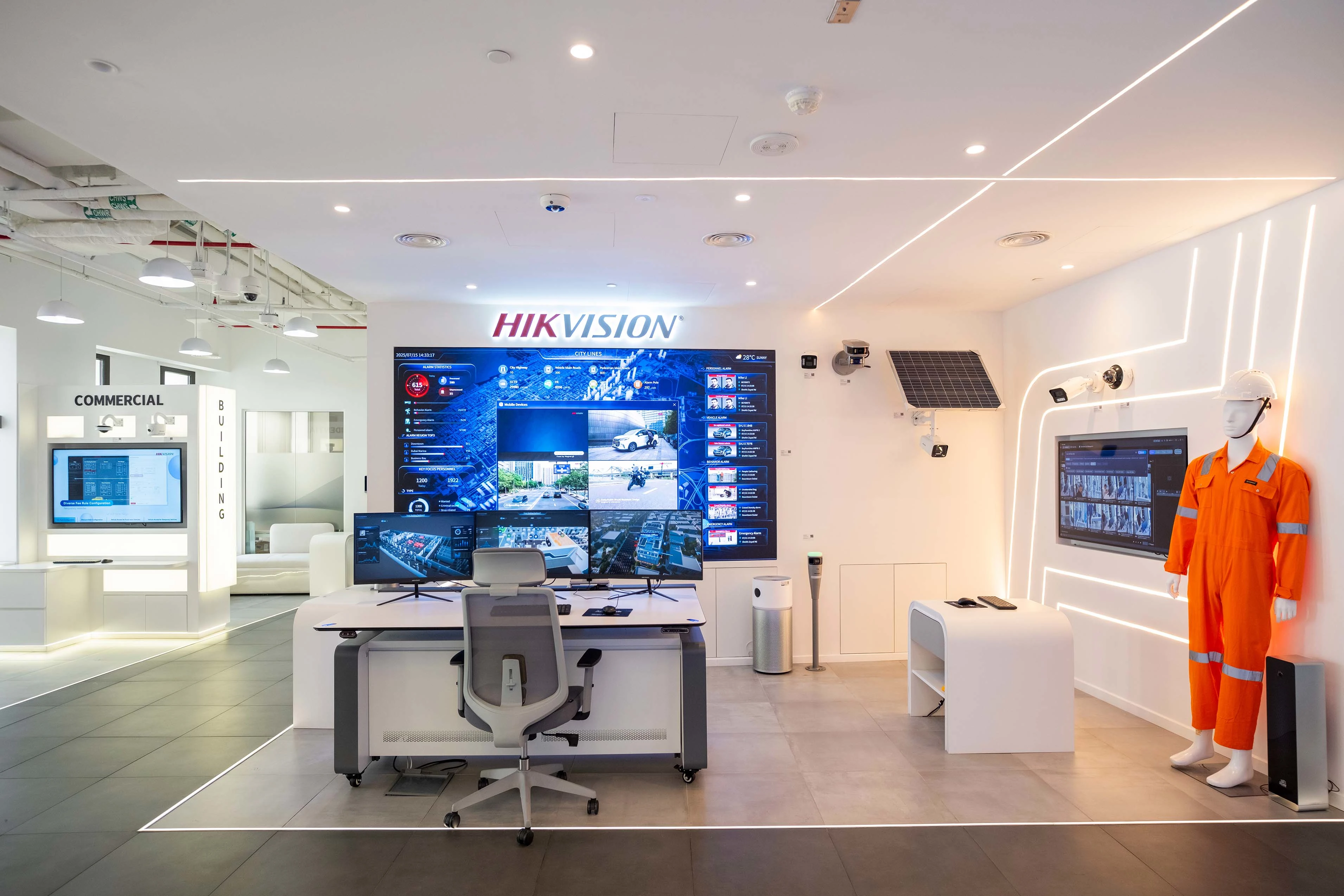
A collection of digital installations does not automatically create a strong visitor experience. Each touchpoint should have a clear role in how visitors discover, understand and engage with the Innovation Centre.
Experiential technologies can be positioned at different moments throughout the space depending on the interaction they are intended to support.
These can include:
- AI-enabled welcome experiences that introduce visitors to the environment.
- LED and interactive displays that communicate capabilities, projects and live content.
- Mixed Reality experiences that allow visitors to explore technology through immersive demonstrations.
- AI-powered personalised experiences that create more relevant and memorable interactions.
The objective is not to maximise the number of digital touchpoints. It is to connect them into one coherent experience where each interaction contributes meaningfully to the visitor's journey.
Personalise the Experience Where It Adds Value
The environment can also respond differently according to the visitor or event.
Potential solutions include:
- Pre-registered visitor profiles.
- Personalised welcome content.
- Displays that adapt to different audiences.
- Guided or self-guided experiences.
- AI-assisted storytelling.
- Visitor interaction analytics.
6. Make the Environment Responsive
An Innovation Centre becomes more useful when it can respond to how many people are present, what activity is taking place and how the environment is performing. Without visibility into how the space is being used, it cannot meaningfully adapt as those conditions change.
Sensors and integrated systems can monitor conditions such as:
- Occupancy.
- Temperature.
- Lighting.
- Sound.
- Space utilisation.
- Visitor activity.
These systems can then support functions such as:
- Adjusting environmental conditions.
- Activating different room presets.
- Optimising energy use.
- Monitoring crowd flow during events.
- Tracking how different spaces are being used.
The aim is not automation for its own sake. It is to reduce unnecessary manual setup and help the environment respond more appropriately to each mode of use. This shifts the Innovation Centre from a static environment toward a more responsive system that can sense, learn and adapt as its use changes.
7. Who Manages an Innovation Centre After It Opens?
Even a technologically advanced Innovation Centre can become static if its content, experiences and operating modes are not continuously managed after opening.
That creates a requirement that is often overlooked during design: someone needs to operate the experience.
An Innovation Centre Curator can coordinate:
- Content refresh cycles.
- Visitor journeys.
- Space modes.
- Event preparation.
- Dashboard monitoring.
- Experience improvements.
- Coordination between HR, Marketing, Operations and other teams.
- Annual programming and activation.
Without ongoing curation, the physical and digital infrastructure can gradually become static. A dedicated role helps keep the centre active, relevant and aligned with changing business needs.
Technology Can Support the Curator
The Curator does not need to control everything manually.
A central dashboard can provide information such as:
- Occupancy.
- Space utilisation.
- Event engagement.
- Environmental conditions.
- Visitor segmentation.
- Content interaction.
Daya's Insight: A Curator's role doesn't stay fixed. Early on, the Curator manages most day-to-day decisions directly; over time, automation and AI take on more of that operational load, letting the Curator focus on strategy and programming instead.
This extends the design conversation beyond how the Innovation Centre opens to how it continues to create value after opening.
8. Keep the Content Alive
Technology platforms can remain in place for years, but the experience can quickly feel outdated if the content displayed through them does not change.
The digital content strategy should therefore be considered alongside the physical and technology design.
Content can operate at different levels:
- Brand Story: Organisational vision, capabilities and achievements.
- Interactive Experience: Demonstrations, immersive storytelling and interactive technology.
- Live Innovation: Current projects, dashboards, events and evolving information.
Different content also needs different refresh cycles.
A corporate story might be updated periodically, while event content may change for every activation and live dashboards can evolve continuously.
Planning these content layers from the beginning helps prevent an expensive Innovation Centre from becoming a collection of screens showing the same information indefinitely.
9. Measure Whether the Space Is Actually Working
If the Innovation Centre is intended to evolve, its success should be measured through how people use and experience it rather than by how impressive it looked on opening day.
Different modes can require different measures, such as:
- Visitor Experience: Visitor satisfaction, number of visits, engagement with interactive experiences and strategic stakeholder engagement.
- Events: Number of events, attendance, partner participation and workshops or innovation activities hosted.
- Everyday Workplace Use: Space utilisation, internal workshops, cross-team collaboration and employee engagement.
- Immersive Experiences: Number of demonstrations, interaction time, technology showcase updates and simulation sessions.
The purpose of collecting this information is not simply reporting. It allows the organisation to understand what is working, identify what can improve and continuously refine the experience.
Daya's Insight: Tie measurement directly to the Curator's role, not just the space itself. When space KPIs form part of the Curator's performance framework, responsibility for keeping the environment active, relevant and continuously improving becomes much clearer.
Conclusion
A successful Innovation Centre is not a finished space. It is an environment designed to change as its users, technologies and business priorities evolve.
Flexible planning provides the physical foundation, while integrated infrastructure, meaningful experiences, responsive systems, active curation and ongoing measurement keep the centre relevant over time.
Daya brings these elements together to create Innovation Centres that support collaboration, learning, demonstration, visitor engagement and continuous evolution within one adaptable workplace.
Planning an Innovation Centre or Experience Centre? Daya can help translate business objectives, user needs and technology requirements into an environment designed for both everyday use and evolving experiences.
Speak with our expert office design team to discuss your Innovation Centre requirements.
- Phone: +974 3365 0805
- Email: hello@wearedaya.com
- Address: 2603, Excellence Tower, Al Shatt St, West Bay, Doha, Qatar
For more information, visit Daya's website: www.wearedaya.com
Frequently Asked Questions
What should an Innovation Centre include?
An Innovation Centre can include collaboration areas, technology labs, demonstration spaces, focus rooms, event or workshop areas, interactive displays and informal networking spaces. The exact mix should be based on how employees, clients, partners and visitors are expected to use the centre.
How do you make an Innovation Centre flexible?
Flexibility can be built through adaptable furniture, movable elements, flexible seating, scalable AV systems and lighting or technology presets for different activities. This allows the same environment to support workshops, meetings, events, demonstrations and visitor experiences without creating a separate space for every function.
What technology should be included in an Innovation Centre?
Technology should be selected according to the activities and experiences it needs to support. This can include interactive displays, video walls, wireless presentation, video conferencing, sensors, Mixed Reality, simulations, digital twins and AI-enabled experiences.
How do you keep an Innovation Centre relevant after it opens?
An Innovation Centre needs ongoing content updates, programming and management. A dedicated Curator or responsible team can coordinate events, refresh digital content, manage visitor experiences and review how the space is being used so the centre continues to evolve instead of becoming static.
How can you measure whether an Innovation Centre is successful?
Success can be measured through indicators such as space utilisation, visitor satisfaction, event attendance, employee engagement, collaboration activity and interaction with digital or immersive experiences. The right measures depend on what the organisation expects the Innovation Centre to achieve.
0.jpeg)
.png)
.jpg)
.jpg)


.jpg)


.jpg)
.jpeg)

edited.jpg)