.jpg)


Planning a Cybersecurity Fusion Centre: Daya’s Guide to Secure and Connected Workplace Design

Written by:Sameer K Muhammad,Project Manager
Date published:
Last reviewed:
Designing the Fusion Centre as an Operational Ecosystem
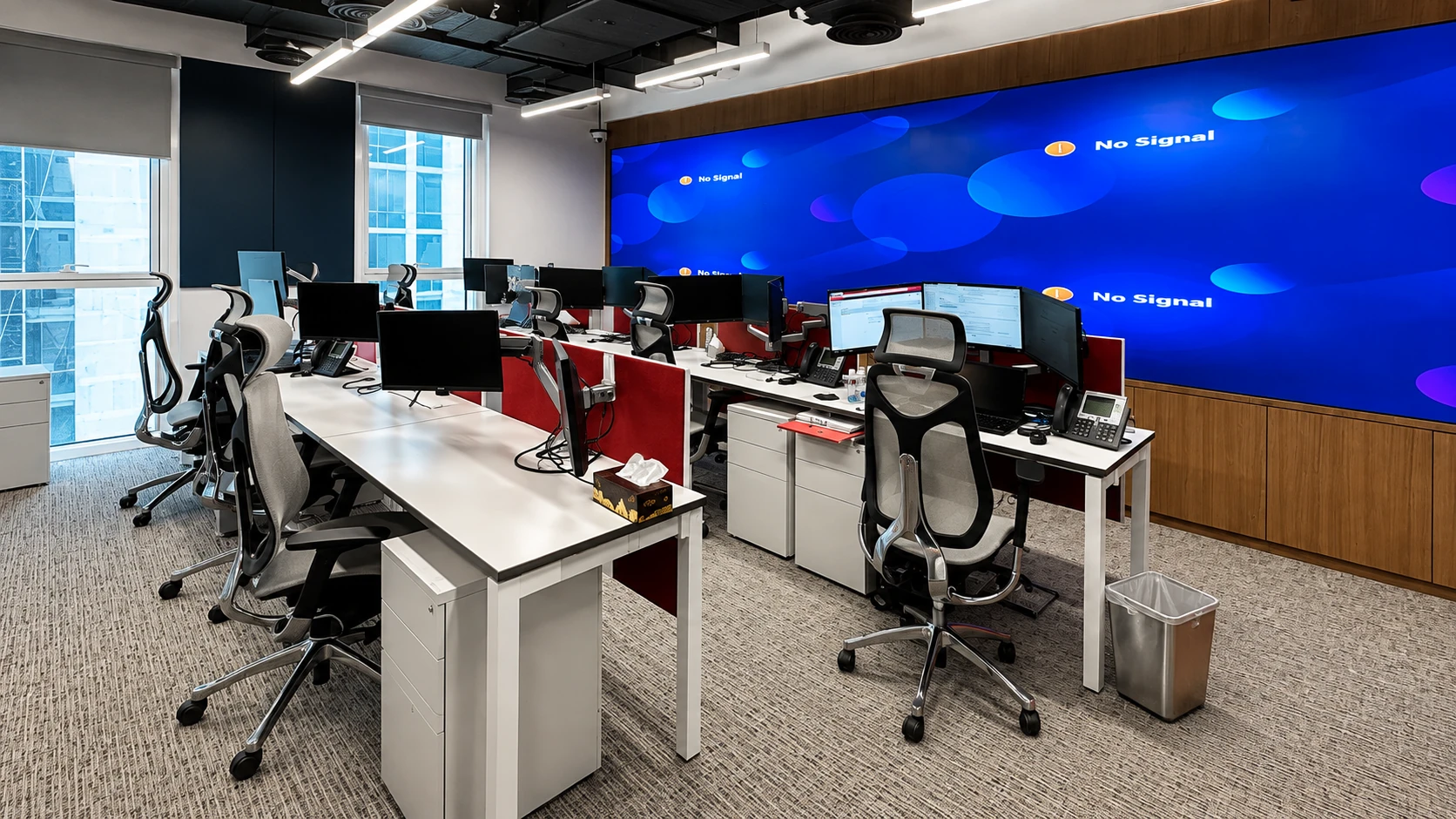
A cybersecurity fusion centre brings operational teams, management, technology and escalation into one coordinated environment. The workplace must make the operation easy to understand while protecting restricted activity, supporting long shifts and controlling how visitors move through the space.
That means starting with how the centre operates rather than how it looks. Sightlines, access, technology, escalation and staff support all become part of the planning strategy from the beginning. Together, these priorities help create a Fusion Centre that is visible, secure, connected and capable of supporting continuous operations.
1. Start With the Operating Model
A Cybersecurity Fusion Centre should be planned around the operational functions it needs to connect.
Depending on the organisation, the operational ecosystem can include:
- NOC: Network availability and performance.
- SOC: Threat detection, investigation and incident response.
- OT: Operational technology supporting production and plant systems.
- War Room: Escalation, executive decision-making and crisis coordination.
- Management: Operational oversight and coordination.
- Staff Support: Rest, refreshment and recovery spaces.
Bringing these functions into one environment can create shared situational awareness and reduce unnecessary handovers between teams.
2. Plan the Sightlines Early
Sightlines matter because the operations floor, shared displays, War Room and management need to remain visually connected where appropriate, while sensitive discussions can still be kept private.
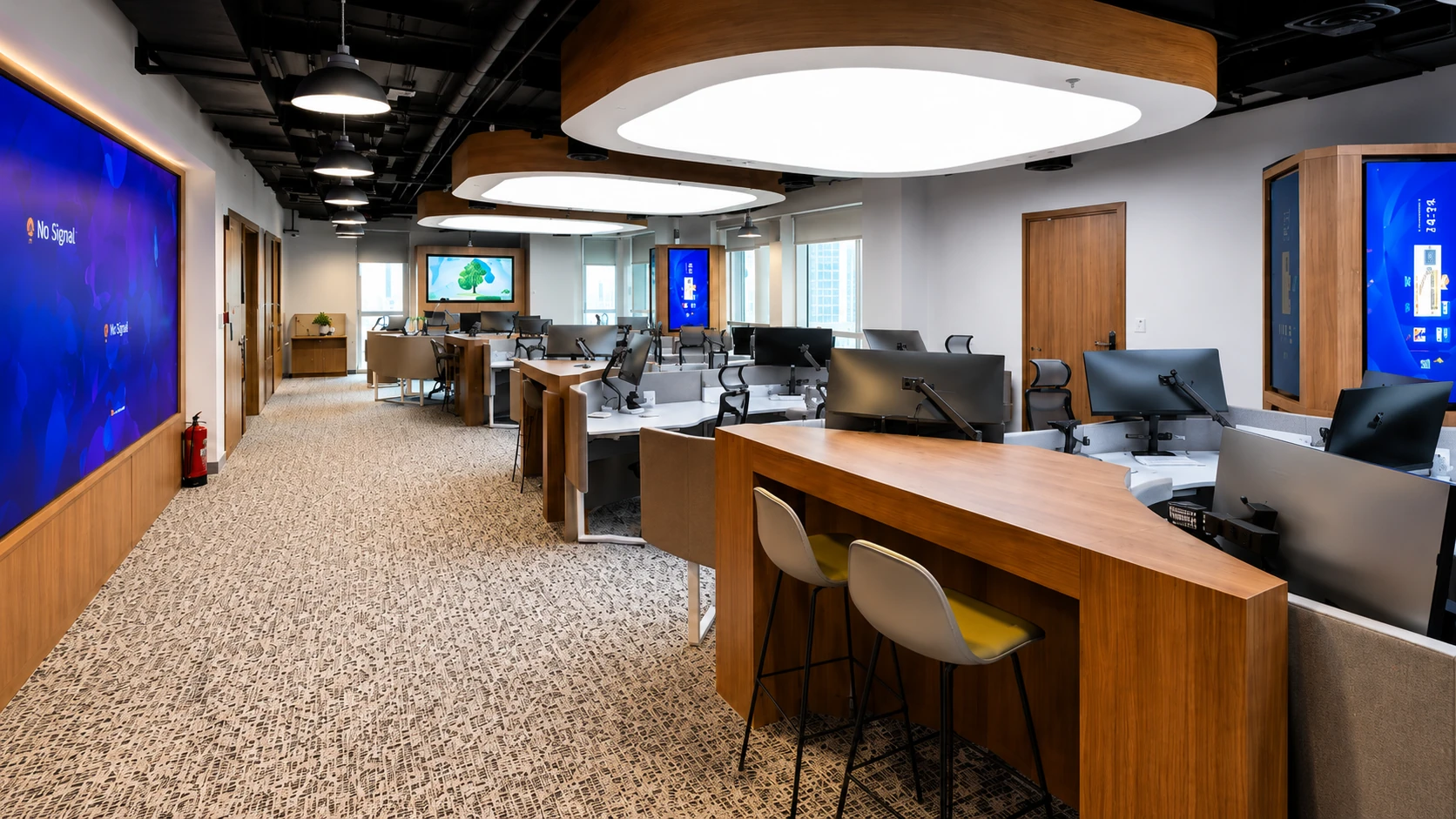
Operator positions and video walls can then be planned together so the operational picture remains clearly visible across the floor. This relationship should be established early rather than treating displays as an addition to an already-developed layout.
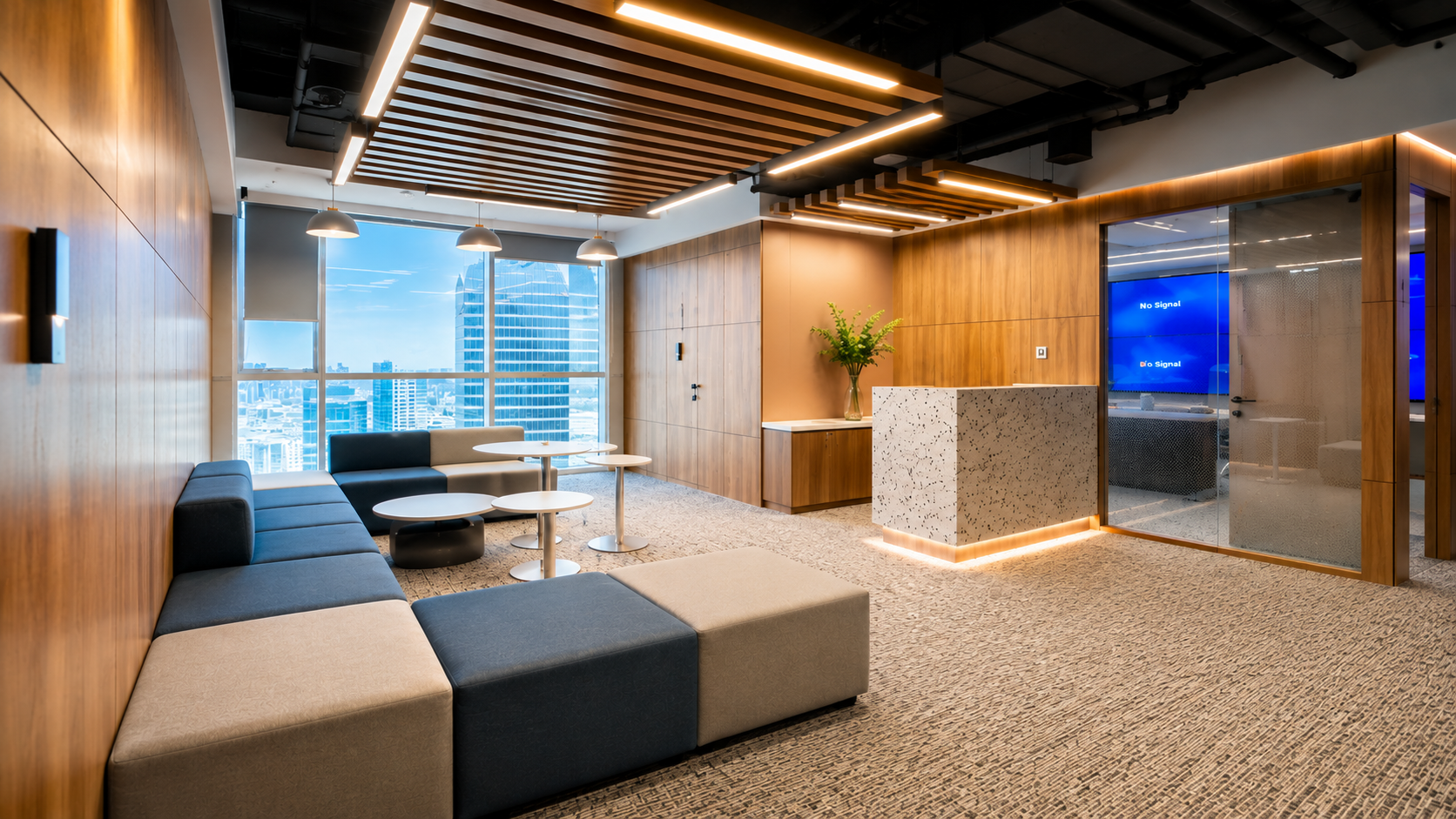
The War Room can maintain a visual connection to the operations floor through smart glass while still providing privacy when required.
Management can remain within reach of both the operations floor and the War Room without sitting directly within either environment.
3. Build With Spatial Hierarchy
Spatial hierarchy matters because visitors, collaboration spaces, restricted operations and critical technical areas should not all operate at the same level of access. Organising these functions in clear layers helps protect sensitive activity while allowing people to move, collaborate and engage with the Fusion Centre where appropriate.
A Fusion Centre can be organised through four levels of access:
- Scheduled Visitor: Controlled arrival and waiting.
- Controlled Collaboration: War Room, huddle spaces and management engagement.
- Restricted Operations: NOC, SOC, OT and operator workstations.
- Critical Technical: IT rooms, control infrastructure and sensitive storage.
The visitor journey can then remain separate from day-to-day operations. A visitor might move from the primary entrance to controlled waiting, then into the War Room or a remote operational viewing environment before leaving, without entering the restricted operations floor.
4. Connect Operations With Escalation
Escalation works best when the operations floor, management and War Room remain closely connected. Their spatial relationship can support shared awareness and reduce handover delays when an operational issue requires a coordinated response.
The operations floor supports day-to-day monitoring, while the War Room provides a dedicated setting for escalation, management involvement and coordinated response.
The War Room can therefore be positioned in direct relationship with the operations floor, with management remaining within reach of both.
Huddle rooms and focused collaboration spaces can provide additional settings within the command and escalation zone.
5. Integrate Technology as Part of the Architecture
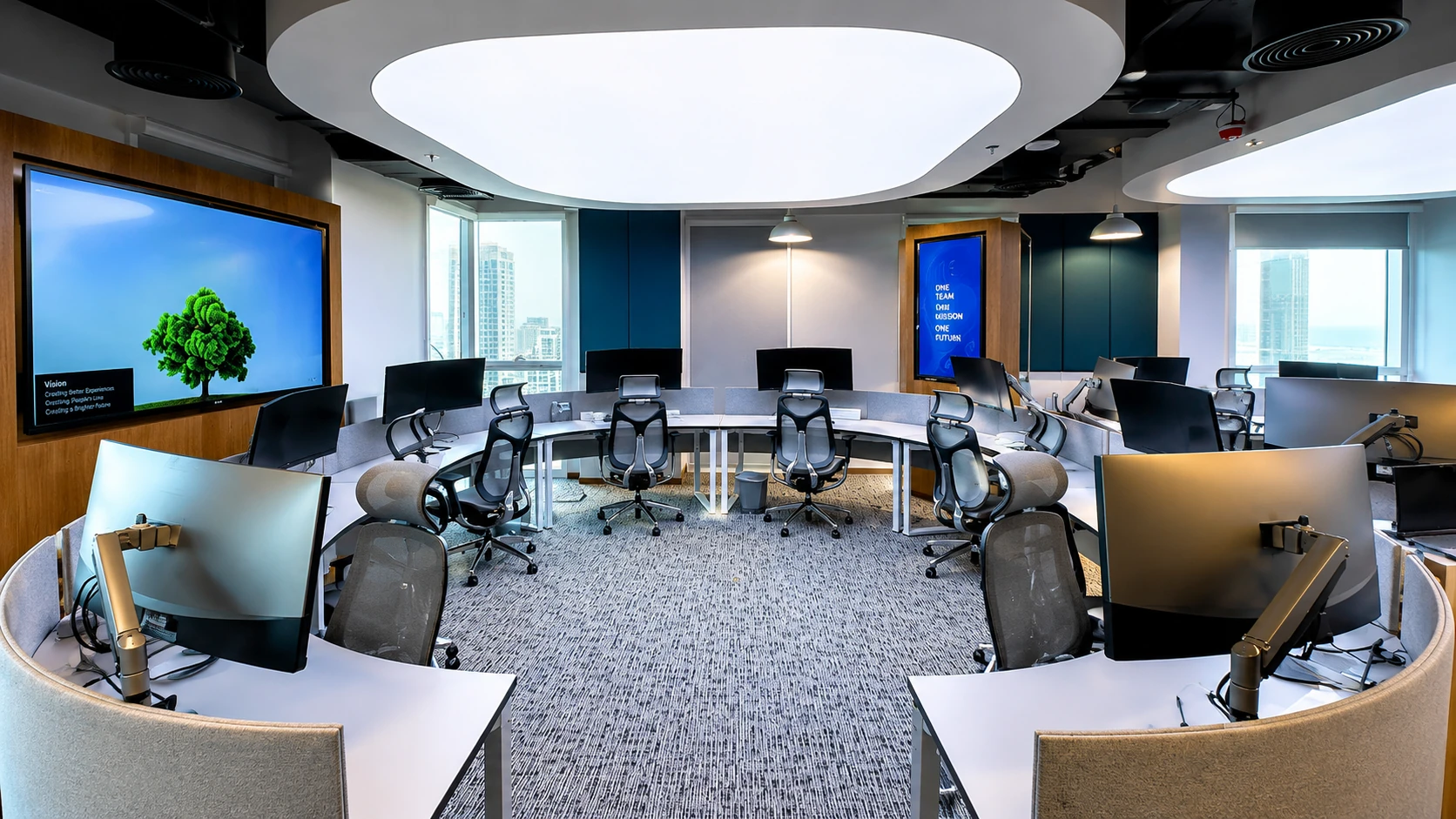
Technology integration matters because the systems that support Fusion Centre operations also shape the physical workplace. Video walls, operator consoles, AV, access control, lighting and power all influence layout, sightlines and how different spaces function.
These systems should therefore be coordinated from the beginning rather than added once the layout is complete.
Day-one technology can include:
- Operational video walls and department displays.
- Operator monitoring consoles.
- Secure video conferencing.
- War Room collaboration displays.
- Central room controls.
- Smart glass.
- Access-control zoning.
- Tunable lighting.
- Coordinated AV and power resilience.
In Daya's Malomatia Cyber Security Office in Lusail, the Fusion Center and specialised war rooms combine extensive display systems with smart glass, adaptive lighting, 360-degree cameras, motion sensors and other integrated technologies. The project demonstrates how technology can become part of the workplace environment rather than functioning as a separate layer.
6. Design for the People Running the Operation
A Fusion Centre may operate continuously, so the environment has to support the people working inside it for long periods.
For shift-based teams, acoustics, lighting, ergonomics and recovery spaces belong in the operational brief rather than the wish list. Staff-support spaces can help operators step away, recover and refocus without leaving the secure environment. These can include:
- Quiet rooms.
- Rest areas.
- Refreshment and pantry facilities.
- Focus spaces.
- Informal collaboration areas.
Where possible, these functions should remain within or immediately accessible from the secure environment. Operators should not have to compromise security simply to step away from their workstation for a short break.
Daya's Malomatia Fusion Centre project demonstrates this principle particularly well: support, meeting and focus areas are kept within the restricted zone, while finishes and screen positioning are also considered in relation to long working shifts.
7. Build for Change
A Fusion Centre should be able to evolve as technology, team structures and operational requirements change, because delivering every feature on day one is unnecessary and makes future redesign more disruptive. The clearer approach is to establish operational essentials first, then add systems and spaces that support performance or can be introduced later.
This can be considered in three levels:
- Operationally Critical: Required for the centre to function.
- Performance Supporting: Improves how effectively teams work.
- Future Enhancing: Adds capability as requirements evolve.
This approach protects the core operation while allowing the workplace to adapt without requiring the entire environment to be redesigned every time technology or organisational structures change.
Conclusion
A Cybersecurity Fusion Centre performs effectively when operations, visibility, secure access, escalation, technology and operator support are planned as one connected system.
Daya brings these requirements together to create workplaces that support continuous monitoring, coordinated response and the people responsible for both.
Planning a Cybersecurity Fusion Centre, SOC or Command Centre? Daya can help translate operational requirements into a secure, coordinated workplace where space, technology and people work together.
Speak with our office design team to discuss your operational workplace requirements.
- Phone: +974 3365 0805
- Email: hello@wearedaya.com
- Address: 2603, Excellence Tower, Al Shatt St, West Bay, Doha, Qatar
For more information, visit Daya’s website: www.wearedaya.com
Frequently Asked Questions
What is a Cybersecurity Fusion Centre?
A Cybersecurity Fusion Centre is an operational workplace that brings security monitoring, technology, management and incident response into one coordinated environment. Its design supports shared visibility, secure access, collaboration and escalation between different operational teams.
What is the difference between a SOC and a Cybersecurity Fusion Centre?
A Security Operations Centre (SOC) is primarily focused on monitoring, detecting and responding to cybersecurity threats. A Cybersecurity Fusion Centre can bring the SOC together with other operational functions, such as NOC, OT, management and incident-response teams, within a more integrated environment.
How do you design a Cybersecurity Fusion Centre?
Cybersecurity Fusion Centre design should begin with the operating model. Workstations, shared displays, sightlines, access zones, War Rooms, management areas, technology infrastructure and operator-support spaces can then be planned around how teams monitor, communicate and respond.
What rooms are needed in a Cybersecurity Fusion Centre?
The exact requirements depend on the organisation, but a Fusion Centre can include an operations floor, SOC and NOC functions, War Rooms, management areas, huddle rooms, technical rooms and staff-support spaces. These spaces should be positioned according to security, workflow and escalation requirements.
How do you future-proof a Cybersecurity Fusion Centre?
Future-ready Fusion Centre design allows technology, teams and operational requirements to evolve without requiring the entire workplace to be redesigned. One approach is to separate requirements into operationally critical systems, performance-supporting features and future enhancements.
0.jpeg)
.png)
.jpg)
.jpg)


.jpg)


.jpg)
.jpeg)

edited.jpg)